summaryChatGPT
How to Turn Tinnitus Notes into an Appointment Summary
Turn scattered notes into a short, factual appointment summary. Includes a fictional before-and-after example and an optional careful ChatGPT prompt.
Field notes
Short, careful articles for people who want to explain tinnitus patterns without turning an app into medical advice.
Editorial promise
Each guide names the product boundary, shows a concrete record or comparison, and keeps medical decisions with professionals.
Start with the free appointment worksheetTurn scattered notes into a short, factual appointment summary. Includes a fictional before-and-after example and an optional careful ChatGPT prompt.
Use a brief optional check-in, leave gaps honestly, and stop treating the diary as a test. Includes a small fictional entry and a pause rule.
Compare paper, a notes app, and OtoNote by organization, sharing, privacy, and cost. Start with a free worksheet rather than a purchase.
Read diary observations cautiously: keep missing data visible, consider overlapping context, and bring questions rather than causal conclusions.
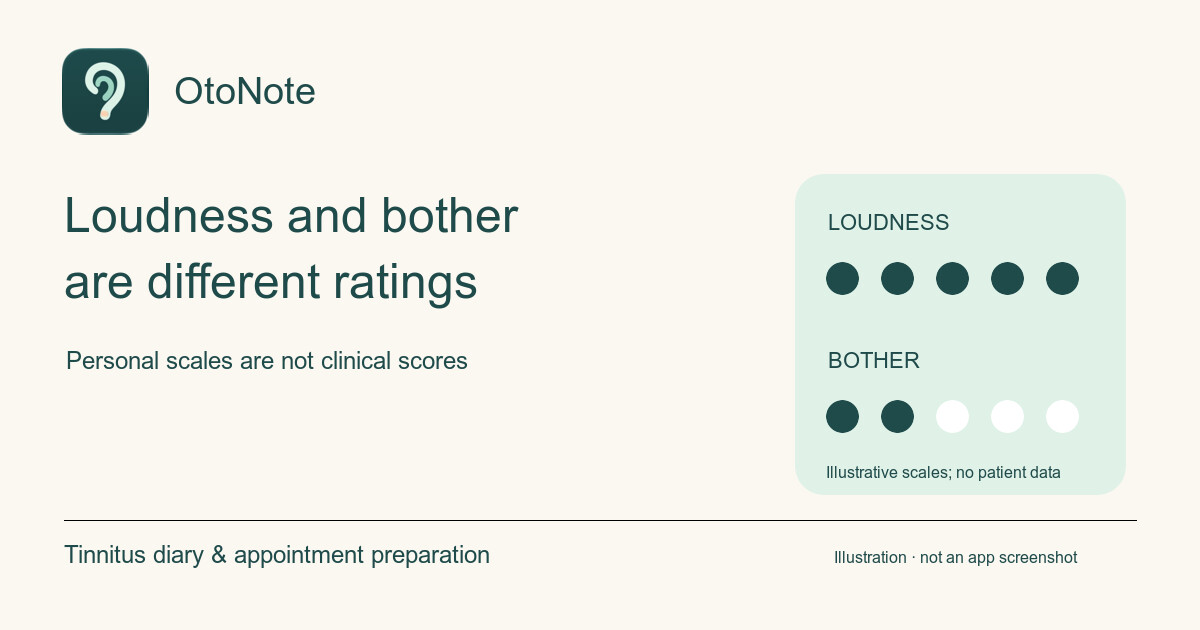
Distinguish the sound you perceive from its impact on your day, with a fictional example and clear limits for personal ratings and existing TFI scores.
Prepare a concise tinnitus record for an ENT or audiology visit, with a free blank worksheet, a fictional example, and questions to bring.
Decide whether you need a record tool, appointment preparation, or clinical support. See a concrete example of observation versus a medical claim.
Keep the record simple
OtoNote is designed around consistent records and careful boundaries—not a promise to interpret symptoms for you.